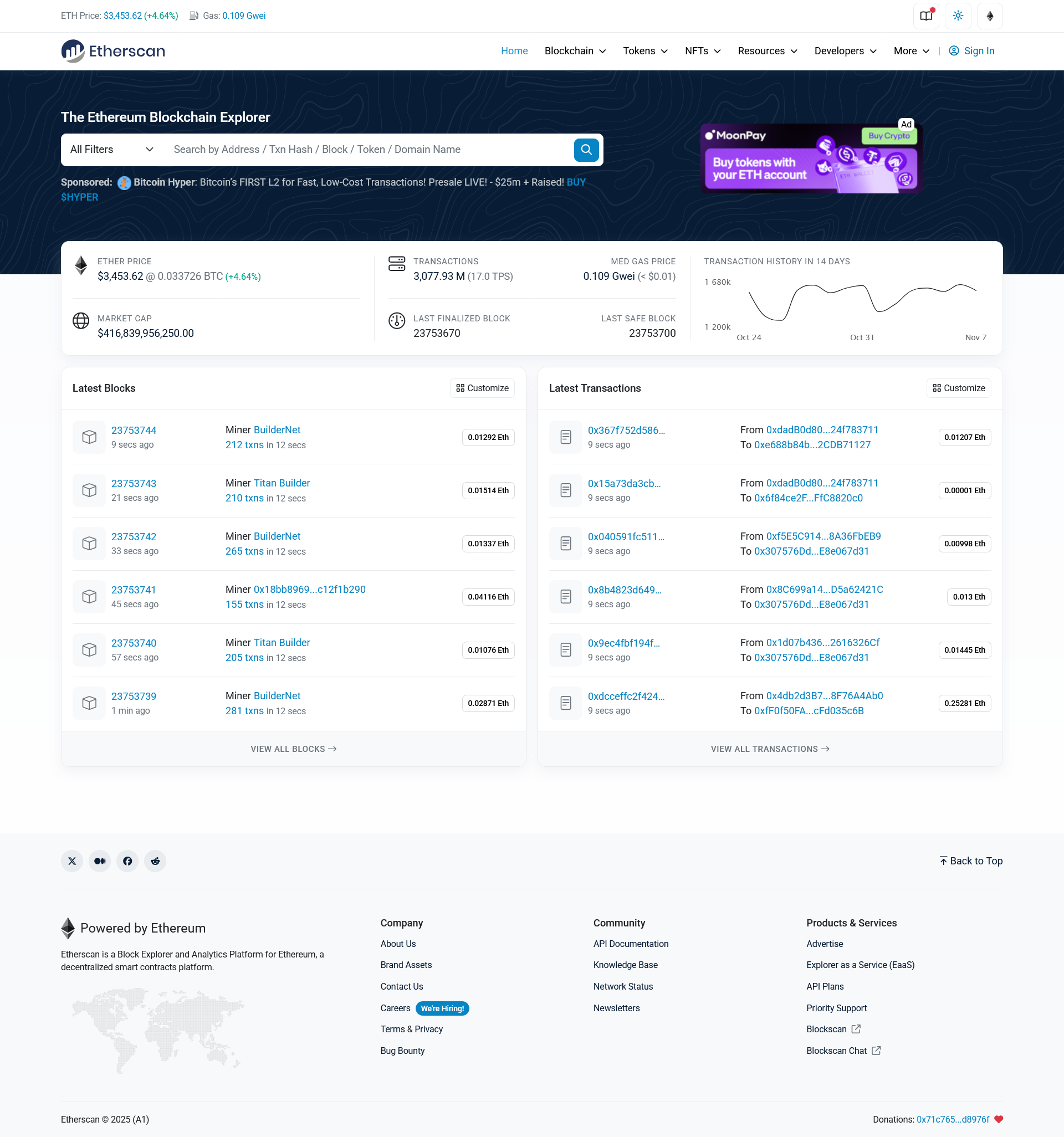
Etherscan: A Comprehensive Guide to Ethereum’s Blockchain Explorer:-
Introduction ;
As blockchain technology grows in popularity, transparency and accessibility become increasingly important. In the Ethereum ecosystem, Etherscan plays a crucial role by allowing users to explore, verify, and analyze blockchain data in real time. Often described as a “search engine for Ethereum,” Etherscan makes complex on-chain information readable and useful for developers, investors, and everyday users alike.
What Is Etherscan?
Etherscan is a blockchain explorer and analytics platform designed specifically for the Ethereum blockchain. Launched in 2015, it enables users to view transactions, wallet addresses, smart contracts, tokens, and blocks recorded on Ethereum.
Importantly, Etherscan is not a wallet and does not store private keys or control user funds. Instead, it provides a transparent window into Ethereum’s public ledger, helping users independently verify activity on the network.
Key Features of Etherscan:-
1. Transaction Tracking:-
. One of Etherscan’s most widely used features is transaction tracking. By entering a transaction hash (TxHash), users can see:
. Transaction status (pending, successful, or failed)
. Sender and receiver addresses
. Gas fees paid
. Block confirmation details
This is especially useful when checking whether a transfer has gone through or diagnosing failed transactions.
2. Address and Wallet Lookup:-
Users can search any Ethereum wallet address to view:
. ETH balance
. Token holdings (ERC-20, ERC-721, ERC-1155)
. Transaction history
. Interaction with smart contracts
This feature is commonly used for auditing, research, and monitoring large “whale” wallets.
3. Smart Contract Verification:-
Etherscan allows developers to publish and verify smart contract source code. Verified contracts are more transparent and trustworthy because users can:
. Read the actual code
. Confirm it matches the deployed bytecode
. Interact with the contract directly through Etherscan
This has become a standard practice for DeFi, NFT, and DAO projects.
4. Token and NFT Explorer:-
Etherscan provides detailed pages for:
. ERC-20 tokens (e.g., stablecoins, DeFi tokens)
. NFTs (ERC-721 and ERC-1155)
These pages display token supply, holders, transfers, and contract information, helping users identify legitimate projects and avoid scams.
5. Gas Tracker
Ethereum transaction fees fluctuate based on network demand. Etherscan’s Gas Tracker shows:
. Current gas prices
. Estimated confirmation times
. Historical gas trends
This helps users choose optimal times to transact and reduce costs.
6. Analytics and Network Data
Etherscan offers insights into:
. Block times
. Network difficulty
. ETH supply changes
. Burned ETH (post-EIP-1559)
. Top accounts and contracts
These metrics are valuable for researchers and analysts studying Ethereum’s health and usage.
Why Etherscan Is Important:-
Transparency and Trust/
Ethereum is a public blockchain, but raw blockchain data is difficult to interpret. Etherscan translates this data into a human-readable format, reinforcing transparency and trust in the ecosystem.
Security and Scam Prevention/
By checking contract addresses, token legitimacy, and transaction details, users can identify suspicious activity and avoid common scams such as fake tokens or phishing contracts.
Developer and DeFi Ecosystem Support.
Developers rely on Etherscan to debug contracts, monitor deployments, and interact with protocols. DeFi users use it to track yields, liquidations, and protocol activity.
Etherscan for Developers.
Etherscan also provides APIs that allow developers to:
. Fetch blockchain data programmatically
. Build dashboards and analytics tools
. Monitor contract activity
These APIs are widely used in wallets, analytics platforms, and crypto applications.
Limitations of Etherscan:-
Despite its strengths, Etherscan has some limitations:
. It is read-only for most users (cannot reverse transactions or recover funds)
. New users may find the interface complex at first
. It only covers Ethereum and Ethereum-compatible networks (though sister sites exist for other chains)
Understanding blockchain basics is still necessary to interpret the data correctly.
Etherscan and the Broader Ecosystem:-
Etherscan has inspired similar explorers across the blockchain space, including:
. BscScan (BNB Chain)
. Polygonscan (Polygon)
. Arbiscan (Arbitrum)
. Optimistic Etherscan (Optimism)
Together, these tools form the backbone of transparency across EVM-compatible blockchains.
Conclusion :-
Etherscan is an essential tool in the Ethereum ecosystem, empowering users with transparency, accountability, and insight into blockchain activity. Whether you are a beginner checking a transaction, a trader analyzing token movements, or a developer verifying smart contracts, Etherscan serves as a trusted gateway to Ethereum’s on-chain world.
As Ethereum continues to evolve, Etherscan remains a cornerstone of blockchain exploration—proving that open data is one of crypto’s greatest strengths.